When we watch a video, we are often amazed by the beautiful storytelling and stunning visuals. But behind the scenes, there is a great team working hard to make sure all these elements come together perfectly. Yes, this is the world of post-production!
Many of us may not realize how crucial this stage is in making a video. From editing to adding sound effects and background music, every detail matters and when all combined it makes the perfection.
So, how does the post-production process of a video work? Who is involved in this process? And what factors determine their success? Let’s explore the interesting workflow behind this magical process.
How Does the Post-Production Workflow of a Video Work?
Post-production is the process of working on recorded footage, including editing, sound design, adding effects, music scoring, and color grading.
In this stage, it’s not only the editor who decides on the cuts. The director and producer also make sure the story stays intact.
This post-production process has a complex workflow and can take months or even years, depending on the scale of the project. In general, this workflow is divided into two main phases, Offline Editing and Online Editing.
To know better what are those, we better move on to the discussion directly.
Offline Editing
Offline editing is the fundamental stage that can be described as the process of “stitching together” a film. After all the basic materials, visual and audio, are collected during shooting, the editor has the critical responsibility of arranging and assembling these raw pieces into a complete and coherent story. At this stage, the main focus is to build the narrative structure, rhythm, and emotional flow before touching more technical or cosmetic aspects.
In practice, the editing room often becomes the place where major creative changes happen. If the editor, director, or producer feels that a scene does not give the desired visual or narrative impact, they have full freedom to switch the order, reorganize the scene composition, or even completely remove the scene.
These bold decisions are made to strengthen the story and ensure that the message can be clearly understood by the audience.
Online Editing
After the picture is declared picture locked, meaning the sequence, duration, and clip cuts are final and will not change, then all visual and audio materials move to the finishing or “polishing” stage. In this phase, the project is handled by experts in several specialized divisions: color, sound, music composition, and visual effects (CGI).
- Color Team (Colorist): Responsible for color correction to balance visual consistency between clips, and for color grading to create certain moods or artistic looks according to the director’s aesthetic vision.
- Sound Team (Sound Designer/Engineer): Works on detailed audio editing, from cleaning noise, adding sound effects (foley and SFX), to dubbing or replacing dialogue if the field recording is not optimal.
- Music Team (Composer): Composes original music or arranges scoring that matches the emotional flow and rhythm of the video so the message becomes more persuasive.
- CGI & Motion Graphics Team: Handles graphic elements, 2D or 3D animation, and other digital visual effects that cannot be achieved through normal filming.
Who Is Involved in the Post-Production Process?
Here are some of the professions involved in video editing or post-production.
Editor
The editor acts as the heart of the storytelling process and works closely with the director to bring the creative vision to life.
Their role goes far beyond cutting and joining clips; an editor controls the rhythm, tempo, and emotional flow that shape how the audience feels the story.
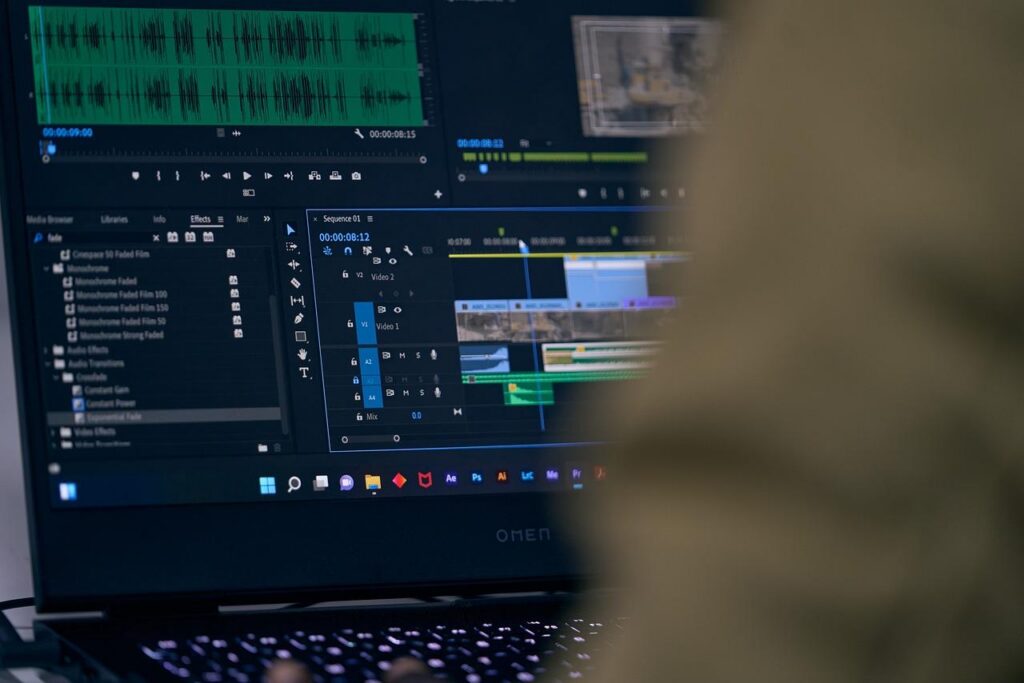
To achieve a coherent result, they must have a deep understanding of narrative structure and strong technical skills in industry-standard software such as Adobe Premiere Pro or Avid Media Composer.
Colorist
On the visual side, the Colorist plays a vital role in shaping the final look of the film through digital color manipulation using tools like DaVinci Resolve.
The process starts with Color Correction to ensure consistent contrast and exposure in each scene. After the visual base is stable, they move to Color Grading, the artistic stage where they apply a specific mood, such as a warm vintage tone or a cold thriller feel, which psychologically affects the audience’s perception.
Sound Designer
A Sound Designer is responsible for creating an immersive audio world that builds the realism and atmosphere of the film. Their tasks cover a wide range, from Dialogue Editing to ADR (Automated Dialog Replacement) if the field recording is not good.
There is also the Foley aspect, where a Foley Artist records organic sound effects synchronized with movements on screen, such as footsteps or clothing rustles. All these elements are then blended by the Sound Engineer in the Sound Mixing process to balance dialogue, music, and sound effects into perfect harmony.
VFX Artist
Lastly, the VFX Artist brings imaginary elements to life, things that are impossible or too expensive to shoot practically. Through Compositing, they combine different visual layers, such as green-screen footage with a digital background, into one realistic image.
They also handle CGI and Animation for 3D objects and use Motion Capture to transfer real actor movements to digital characters, creating highly convincing visual interactions in the final product.
Have a project that needs expert post-production handling? Trust SNXP Studio to deliver high-quality editing, sound design, color grading, and visual effects that elevate your video to the next level.