If you are asking what is a production house, it is a company that manages the process of creating video and other audiovisual content from planning to final delivery.
A production house can handle pre-production tasks such as scripting, casting, location scouting, crew and equipment planning, followed by filming and post-production work including editing, sound, color grading, motion graphics, and final exports.
Unlike a company that only develops creative or marketing concepts, a production house is directly involved in turning those ideas into finished visual content.
What Is a Production House?
The production house meaning is easiest to understand by looking at where responsibility sits. A production house is responsible for making the audiovisual product, not simply developing the marketing idea behind it.
A typical project starts with a brief. The production team then translates that brief into a workable production plan. That can involve developing the script, creating a shot-list, finding locations, arranging crew and equipment, scheduling talent, managing permits, and preparing the call sheet.
On shoot day, the producer coordinates the moving parts while the director and crew handle the creative and technical execution. After filming, the production team moves into editing, sound, color, graphics, and final exports.
What Does a Production House Do That an Agency Does Not?
The difference becomes clearer when a campaign moves from an idea to an actual shoot. An agency may develop the campaign concept, communication strategy, creative direction, media plan, or advertising approach. A production house turns the approved creative into something that can physically be filmed and delivered.
So, what does a production house do that an agency normally does not? It manages the production mechanics in detail.
For example, if an agency develops a concept for a corporate film in Jakarta, someone still needs to determine which location can accommodate the crew, what camera package is appropriate, how many shooting days are required, where lighting can be placed, how talent will be scheduled, how audio will be captured, and what happens if the location becomes unavailable.
That is production work.
The two can work closely together. On many commercial projects, the agency remains involved in creative approval while the production house manages crew, equipment, locations, scheduling, filming, and post-production.
How Does a Production House Work?
A professional production normally follows three main stages: pre-production, production, and post-production. Each stage solves a different set of problems before the final video reaches the client.
1. Pre-Production
Pre-production is where most practical decisions are made before anyone presses record.
The producer works through the brief, budget, schedule, locations, crew requirements, talent, equipment, and deliverables. A corporate interview, for example, may require only one location and a small crew, while a commercial can involve multiple locations, talent, art direction, lighting teams, and several camera setups.
2. Production
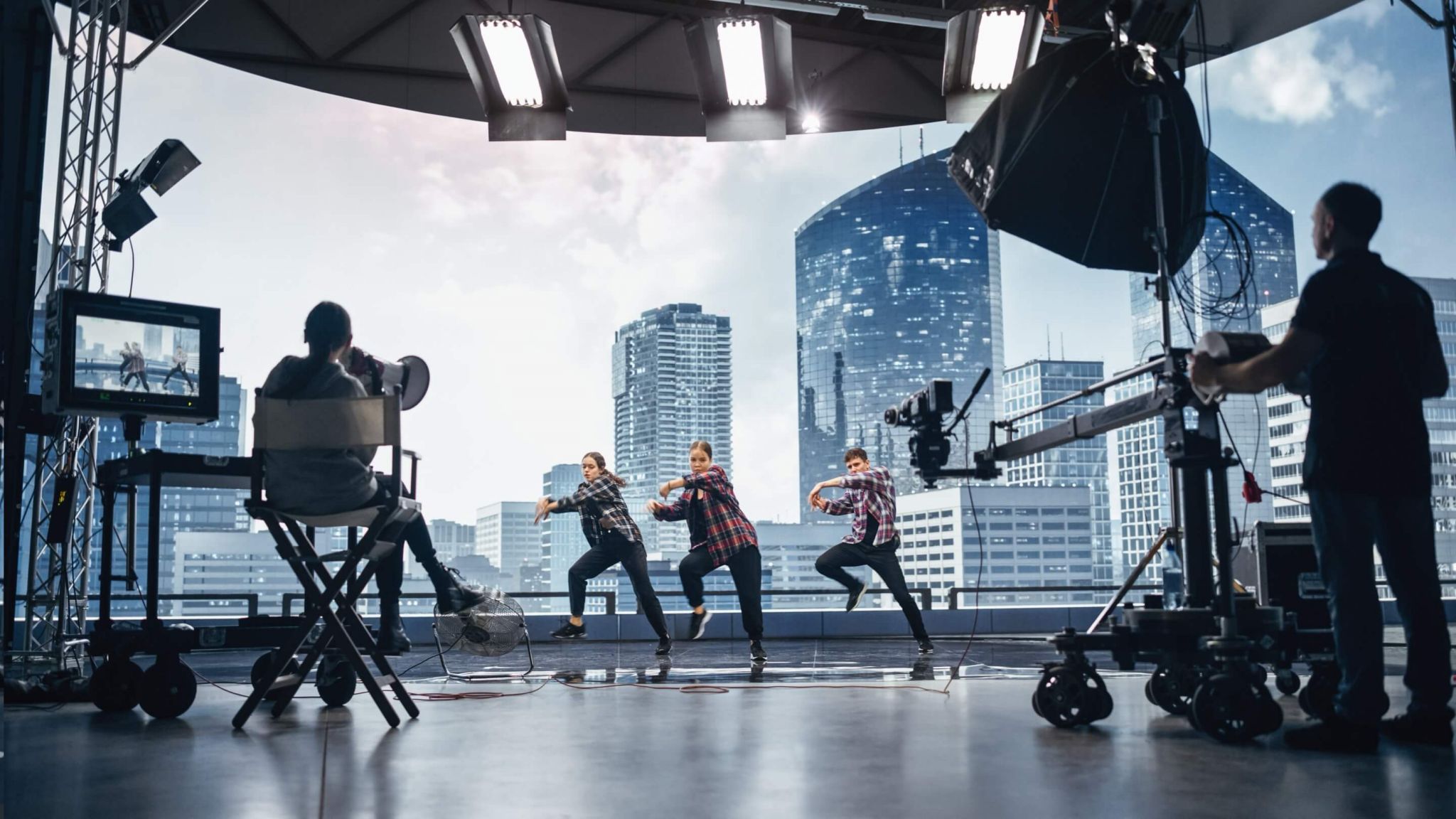
Production is the shoot itself. This is where the planned concept becomes recorded material.
Depending on the project, the crew may work with cinema cameras, cinema lenses, wireless microphones, boom microphones, LED lighting, tripods, sliders, gimbals, or other grip equipment.
The producer keeps the production moving while the director manages the creative execution. A cinematographer or camera operator handles framing and exposure, while the sound team monitors dialogue and environmental audio.
A simple interview may take a few hours to shoot. A larger commercial production can require several shooting days and multiple locations.
3. Post-Production
Post-production begins after the footage is captured. The editor reviews the material, builds the first cut, and shapes the story according to the approved brief.
A single master video may also need several versions. For example, a corporate film could require a 16:9 website version, a shorter social cut, and vertical versions for mobile platforms.
How Should You Choose a Production House?
Start with the type of production you actually need. A company experienced in corporate interviews may have a very different workflow from one specializing in large-scale commercials.
Review the portfolio, but also ask how the production is managed. Who will produce the shoot? Who handles locations? What equipment is included? How many revision rounds are allowed? Who manages permits? What are the expected deliverables?
For a multi-location shoot, ask specifically how the company handles travel, crew coordination, scheduling, and post-production. The answers often tell you more about the production workflow than a portfolio alone.
Communication is equally important for international projects. Choose a production house capable of coordinating the project remotely, handling everything from planning and shoot monitoring to reviews and status updates, without requiring the client’s physical presence on set.
Frequently Asked Questions
What is a production house?
A production house is a company that manages the creation of audiovisual content, from pre-production and filming to post-production and final delivery.
What does a production house do?
It handles the practical and creative execution of video production, including crew, equipment, locations, filming, editing, sound, color, graphics, and delivery.
Is a production house the same as an advertising agency?
No. An agency commonly develops campaigns and marketing concepts, while a production house focuses on producing the actual audiovisual content. They often work together.
What equipment does a production house use?
Equipment depends on the project. A production may use cinema cameras, lenses, LED lights, wireless microphones, boom microphones, tripods, gimbals, and other grip equipment.
Can a production house manage shoots outside its home city?
Yes. Production companies can coordinate crews and logistics across multiple locations. SNXP Studio, for example, supports productions across Indonesia and selected APAC locations from its Bali and Jakarta operations.