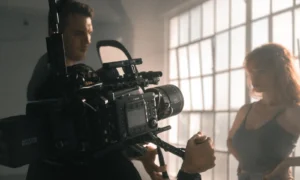

If you are commissioning a corporate or commercial video for the first time, whether working independently or connecting through a corporate video hub, knowing how to brief a video production company can determine how smoothly the project runs. A good brief tells the producer what the video needs to achieve, who will watch it, where it will be used, what must appear on screen, and what cannot change.
You do not need to explain how to operate a Sony FX6, choose between a 24mm and 50mm lens, or light an interview. That is the production team’s job. Your role is to explain the required result, business context, practical constraints, and approval process.
What Should A Video Production Brief Contain?
A good video production brief should answer six questions: What are we making? Why are we making it? Who is it for? Where will it be used? What must be included? When does it need to be delivered?
Start with the objective. “We need a corporate video” is not enough. “We need a 90-second video introducing our new manufacturing facility to potential B2B clients” gives the production team a clear direction.
Include:
- Objective: What should the video communicate or achieve?
- Audience: Customers, investors, employees, partners, or another group?
- Deliverables: For example, one 90-second master and three 15-second vertical cuts.
- Platforms: Website, YouTube, LinkedIn, Instagram, paid advertising, or internal use.
- Key messages: The two or three points that must survive in the final edit.
- Mandatory content: Product, spokesperson, location, logo, statistics, or legal wording.
- Deadline: Shoot date, review dates, final approval, and publication date.
These details give the producer something concrete to build around.
How Should You Describe The Look You Want?
Avoid relying only on words such as “cinematic,” “premium,” or “modern.” They can mean completely different things to different crews.
Describe what you actually want to see.
For example: “Use natural daylight, controlled camera movement, medium and wide shots of the office, and close-ups of people working. Keep colors neutral and avoid heavy skin retouching.”
Reference videos are useful too. Provide two or three examples and explain what you like about each one.
A creative brief for video could say: “We prefer the steady pacing of Reference A, the soft natural light used in Reference B, and the interview composition from Reference C. Please avoid overly fast editing and dramatic background music.”
If you do not know production terminology, describe the result instead. “Follow the subject as they walk through the hotel” is enough. The producer can translate that into camera movement, lens selection, lighting, and blocking.
When Should You Discuss The Budget?
Discuss the budget at the beginning, not after the concept has already been developed. Understanding industry standards and the typical corporate video cost Indonesia helps set realistic expectations early on.
Budget affects crew size, shooting days, locations, equipment, talent, lighting, travel, animation, music licensing, and post-production.
If the budget is fixed, say so. The producer can then protect the most important elements instead of discovering during planning that the concept requires resources that are unavailable.
What Happens After You Send The Brief?
The producer should turn your brief into a production plan. Depending on the project, this may include a treatment, quotation, schedule, crew proposal, equipment list, location plan, script, and shot-list.
Check these against your original requirements.
If the product demonstration is mandatory, confirm that it appears in the shot-list. If vertical social media versions are required, make sure the framing is considered during filming rather than relying entirely on cropping afterward.
How Can You Write A Better Brief For Your First Production?
For a straightforward corporate video, two to four pages is often enough. Focus on information that affects creative decisions, production planning, budget, and scheduling.
Before sending it, confirm:
- What is the objective?
- Who is the audience?
- What must they understand?
- Where will they watch the video?
- What must appear on screen?
- What cannot change?
- What references show the intended style?
- Who approves the final edit?
- What is the deadline?
- What budget range is available?
- Are there location, access, talent, travel, or equipment restrictions?
The goal is not to tell the production company how to make the film. It is to remove uncertainty before production begins.
Quick Brief Checklist
Before sending your brief, confirm that it includes:
- Objective and target audience
- Key messages and mandatory content
- Deliverables and aspect ratios
- Platforms and intended use
- Visual references
- Locations and access restrictions
- Talent and interview requirements
- Budget range
- Production and approval deadlines
- Final decision-maker
- Legal or brand requirements
Conclusion
Knowing how to brief a video production company starts with being specific about the result you need, not the technical process behind it. Explain the objective, audience, key messages, deliverables, references, budget, locations, and practical restrictions before production begins.
A clear brief gives the crew enough information to make practical decisions while keeping the project aligned with your original requirements, timeline, budget and any critical questions before signing a contract.
Frequently Asked Questions
How long should a video production brief be?
For a straightforward corporate video, two to four pages is usually sufficient. Include information that affects creative, production, budget, and scheduling decisions.
Should I include reference videos?
Yes. Two or three references are useful, especially when you explain exactly what you like or dislike about each one.
Should I tell the producer which camera to use?
Usually, no. Describe the visual result and any genuine technical requirements. The production team can select the appropriate camera, lenses, lighting, and other equipment.
When should I discuss the budget?
At the beginning. The budget determines the realistic scope of crew, equipment, locations, shooting days, and post-production.